
Educational overview of paced breathing you can explore during daily life. General information only — not a treatment programme or medical guidance.
View TechniquesWhen you change breathing rhythm, you send immediate signals through baroreceptors and the vagus nerve. A longer exhale activates the parasympathetic branch — sometimes called the “rest and digest” response — while rapid shallow breaths tend to amplify sympathetic activation. Understanding this mechanism transforms breath from a background function into an intentional dial you can turn.
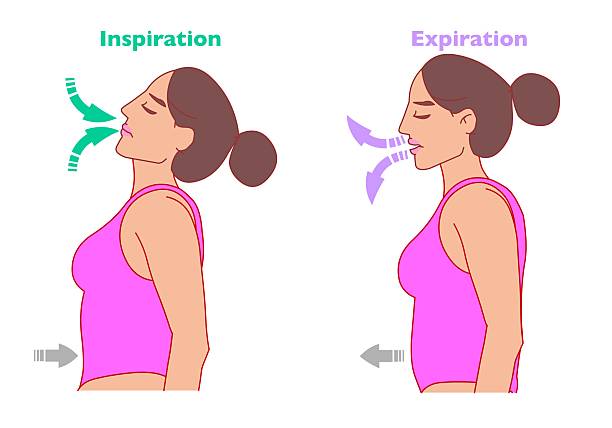
Diaphragmatic breathing engages the lower lungs and supports fuller oxygen exchange.
Start by observing your default pattern for sixty seconds without changing anything. Count breaths per minute. Notice whether the chest or belly leads. Many office workers in Brisbane and the Gold Coast discover they breathe fourteen to eighteen times per minute through the mouth — a pattern associated with low-level chronic activation. Simply switching to nasal breathing can reduce that rate within a few minutes.
The educational principle here is measurement before modification. You cannot adjust what you have not observed. Once you know your baseline, introduce one change at a time: nasal inhale, extended exhale, or reduced breath volume. Track how your shoulders, jaw, and thoughts respond after five cycles.
These four methods cover most daily situations — from pre-meeting nerves to post-argument recovery. None require breath holds that feel strained.
Inhale four counts, hold four, exhale four, hold four. Used by athletes and emergency responders to maintain focus under pressure. The equal rhythm creates predictability that the nervous system finds stabilising. Use when you notice upper-edge agitation — racing thoughts, tight chest, urge to interrupt.
Inhale for four, exhale for six to eight. The extended exhale emphasises parasympathetic activation. Ideal before sleep or after receiving difficult news. Pair with a hand on the belly to confirm downward movement during the inhale.
Breathe at roughly five to six breaths per minute — typically five counts in, five counts out. Research links this rate to improved heart rate coherence. Set a gentle timer and practise during a daily walk along the Sunshine Coast.
Take a normal inhale, then a second short inhale on top, followed by a long exhale through the mouth. Stanford researchers describe this as a rapid reset for acute stress spikes. Use sparingly — one to three sighs — when frustration peaks suddenly.
Breath awareness sticks when it fits your life rather than competing with it. These educational guidelines suit busy schedules across Australian time zones.
“Breath control is not about forcing calm. It is about giving your nervous system a reliable signal that you are paying attention.”
Upcoming breath-focused sessions where you can practise techniques with guided observation support.
| Date | Event | Focus |
|---|---|---|
| 12 Jul 2026 | Morning Witness Circle | Nasal breathing basics and baseline tracking |
| 9 Aug 2026 | Breath & Body Scan Workshop | Box breathing and extended exhale practice |
| 23 Aug 2026 | Evening Reset Session | Coherent breathing for wind-down routines |